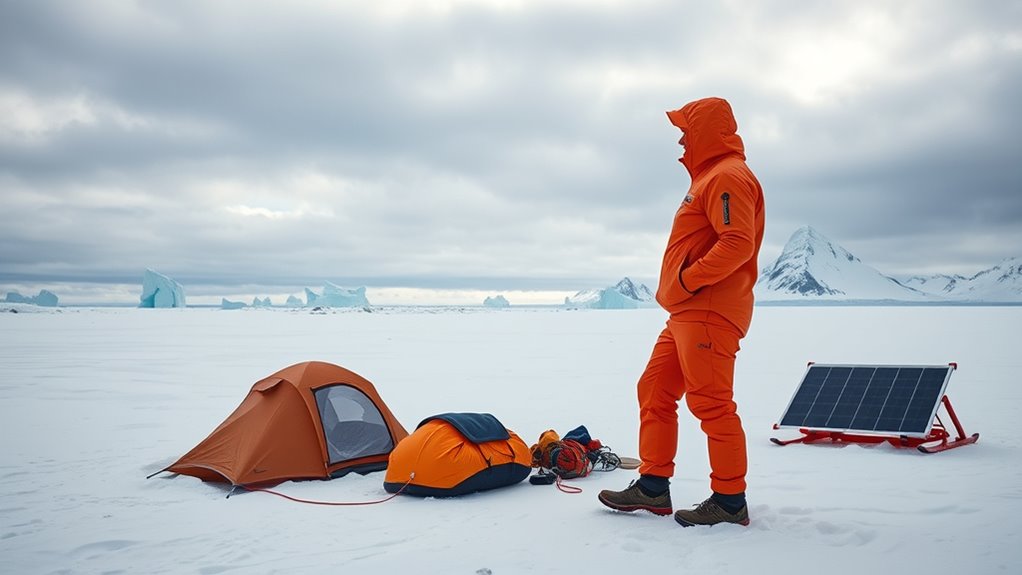

To survive in the Arctic, you must understand its extreme cold and shifting ice conditions, which require specialized gear and constant ice assessments. Watch wildlife behaviors, such as seal movements and polar bear patterns, to stay safe and adapt your plans accordingly. Carry reliable supplies—insulated clothing, high-calorie food, emergency devices—and stay alert to changing environments. If you continue exploring, you’ll discover detailed strategies to navigate this fragile and unpredictable landscape safely.
Key Takeaways
- Assess and monitor ice conditions continuously to identify unstable or melting areas and plan safe routes accordingly.
- Carry specialized gear, including insulated clothing, emergency supplies, and signaling devices suited for extreme cold.
- Understand wildlife behaviors and habitats to avoid dangerous encounters and utilize natural resources safely.
- Stay adaptable by updating plans based on changing ice melt patterns and environmental conditions.
- Respect the fragile Arctic ecosystem, minimizing environmental impact and practicing responsible exploration.
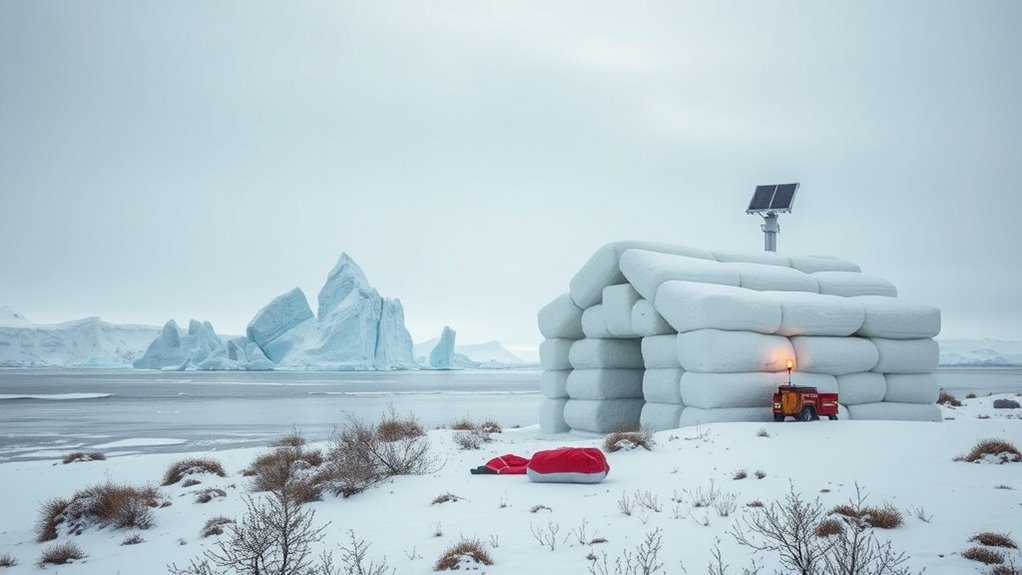
Are you prepared to survive in the Arctic’s extreme conditions? Venturing into this icy wilderness demands more than just warm clothing and a sturdy shelter. You need to understand the complex environment, especially how arctic wildlife and ice melt dynamics influence your survival chances. The Arctic is a delicate ecosystem, teeming with unique arctic wildlife like polar bears, seals, and Arctic foxes. Recognizing their behaviors and habitats helps you avoid dangerous encounters and locate essential resources. For instance, knowing where seals haul out on ice floes can guide you to potential food sources, while understanding polar bears’ hunting patterns can keep you out of harm’s way. The presence and movements of arctic wildlife are closely linked to ice conditions, which are constantly changing due to ice melt dynamics. As global temperatures rise, ice melts more rapidly, shrinking habitats for these animals and altering traditional migration routes. These shifts can make survival more challenging, as food sources become scarcer and navigation more difficult. Staying aware of ice melt dynamics helps you predict the stability of ice formations, indispensable for safe travel and shelter building. For example, thin or melting ice can give way under your weight, increasing the risk of falling into freezing water. Hence, constantly assess ice thickness and avoid areas with signs of recent melting or cracking. Planning your route with an understanding of these environmental changes can prevent dangerous situations. Provisioning is equally essential—bring reliable gear designed for extreme cold and changing conditions. Insulated clothing, high-calorie food, and emergency signaling devices are essentials, but so is knowledge about the environment. Learning how arctic wildlife adapts to shifting ice conditions—such as seals diving deeper or animals changing migration timings—can inform your decisions and improve your chances of survival. Additionally, awareness of cold-pressed vegetable juice benefits can help maintain your energy and hydration levels during long treks. Remember, the Arctic’s landscape is constantly evolving, and what was safe yesterday might not be today. Staying informed about current ice melt dynamics and wildlife patterns allows you to adapt quickly. Always keep a close eye on the environment, listen for clues from animal movements, and be ready to change your plans if conditions worsen. Being prepared isn’t just about surviving the cold—it’s about understanding the environment’s unpredictability and respecting its delicate balance. By combining knowledge of arctic wildlife behaviors and ice melt dynamics with proper gear and cautious planning, you critically increase your chances of making it through the Arctic’s extreme conditions safely.

Winter Outdoor Riding Insulated Full-Body Suit Freezer Warehouse Coverall & Ice Fishing Suit – Heavy-Duty Windproof One-Piece Design (3XL)
Lightweight & Exceptionally Warm:Extreme cold protection rated for -40°C – Quilted cotton-fill insulation delivers lightweight warmth with superior…
As an affiliate, we earn on qualifying purchases.
As an affiliate, we earn on qualifying purchases.
Frequently Asked Questions
What Are the Most Effective Ways to Communicate in Arctic Emergencies?
In Arctic emergencies, your best bet is to use satellite communication systems, which work even when traditional networks fail. Carry a satellite phone or a GPS device with emergency signaling features, like distress beacons, to alert rescue teams quickly. Make sure to familiarize yourself with their operation beforehand. Effective communication can mean the difference between rescue and prolonged exposure to harsh conditions, so always prioritize reliable tools for emergency signaling.
How Do I Prevent Frostbite During Prolonged Exposure?
To prevent frostbite during prolonged exposure, stay vigilant for early frostbite symptoms like numbness and skin discoloration. Keep your clothing insulated with multiple layers, especially on extremities, to retain heat. Avoid sweating, which can cause moisture loss and chill your skin. Regularly check your fingers, toes, nose, and ears. If symptoms appear, seek shelter immediately. Staying proactive can mean the difference between safety and serious injury.
What Wildlife Hazards Should I Be Aware of in the Arctic?
Be aware of wildlife hazards like polar bear encounters, which can be dangerous if you get too close or surprise them. Always carry deterrents such as bear spray and make noise to avoid startling them. Also, watch out for arctic fox threats, especially if you’re near their dens or food sources. Staying vigilant, maintaining a safe distance, and understanding animal behaviors help you stay safe in these icy environments.
How Can I Store and Manage Arctic-Specific Survival Supplies?
Ever wondered how to keep your supplies safe in extreme cold? You should use Arctic storage solutions like insulated containers and airtight seals to prevent moisture and freezing. Manage your cold weather gear by organizing it in quick-access, insulated pockets, and regularly checking for damage. Do you really want your essential items to fail when you need them most? Proper storage and management guarantee your survival gear stays functional and reliable in harsh Arctic conditions.
Are There Specific Navigation Tools Recommended for Arctic Conditions?
For arctic conditions, you should use specialized polar navigation tools like a GPS with Arctic mapping, a magnetic compass designed for high latitudes, and a sextant for celestial navigation. Ice navigation charts are essential for understanding ice conditions. Always carry a backup navigation device, such as a handheld GPS, and practice ice navigation techniques regularly to guarantee safety. These tools help you navigate safely through challenging polar environments.

Survival Kit, 262Pcs Survival Gear and Supplies with First Aid Kit Pouch and Crossbody Bag, Emergency Kit with Tent, Camping Axe Hammer, Survival Shovel w/Pick, Bug Out Bag Gifts for Men Women
[Preparedness for the Unknown]: While no one can predict when or how severe a disaster or accident will…
As an affiliate, we earn on qualifying purchases.
As an affiliate, we earn on qualifying purchases.
Conclusion
By following these survival tips, you can increase your chances of making it through the Arctic’s icy grip. Remember, your resilience and quick thinking are your strongest tools in this unforgiving environment. With careful planning and unwavering determination, you can conquer even the most brutal conditions. Don’t let the Arctic’s icy heart freeze your spirit—stay alert, stay prepared, and you’ll emerge stronger than ever, ready to face whatever nature throws your way.
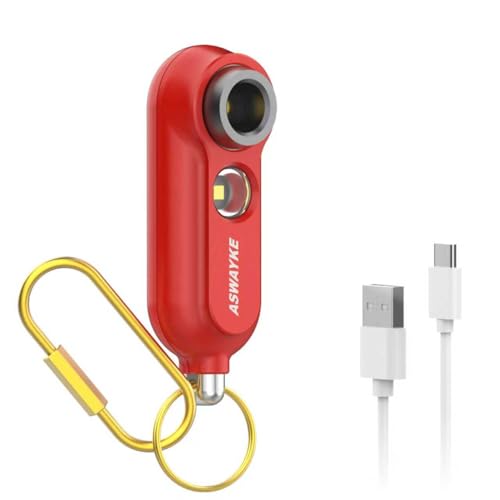
aswayke 125dB Rechargeable Bear Horn,IPX5 Waterproof & LED Flashlight Bear Deterrent Device for Hiking, Camping, Outdoor Survival-Red
【Activate 125dB Defense】This Bear Horn generates an extreme 125dB alarm through its large buzzer and aluminum alloy resonance…
As an affiliate, we earn on qualifying purchases.
As an affiliate, we earn on qualifying purchases.

Cold Weather MRE Pack – 12 Different Freeze Dried Long Shelf Life, High Calorie Camping MRE Meals – Emergency Supply for Hikers, Survivalists & More
𝐌𝐢𝐥𝐢𝐭𝐚𝐫𝐲 𝐆𝐫𝐚𝐝𝐞 𝐂𝐨𝐥𝐝 𝐖𝐞𝐚𝐭𝐡𝐞𝐫 Meals: Fuel your next adventure or emergency preparedness kit with our cold weather military…
As an affiliate, we earn on qualifying purchases.
As an affiliate, we earn on qualifying purchases.