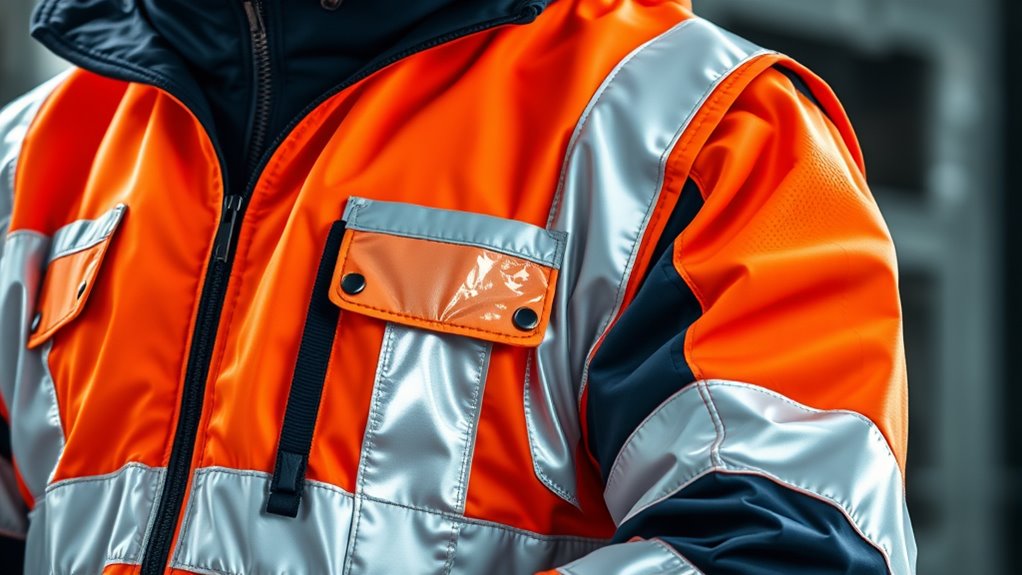

Protective clothing uses multiple layers to keep you safe from hazards like heat, chemicals, and sharp objects. The inner layer wicks moisture away, while middle layers provide insulation or chemical resistance, and the outer layer offers durability. Reflective materials boost your visibility in low-light conditions, and heat-resistant gear helps manage extreme temperatures. Combining these features with smart technology enhances your safety. Keep exploring to discover how these elements work together to protect you effectively.
Key Takeaways
- Layered design provides comprehensive protection against hazards like heat, chemicals, and abrasions.
- Reflective materials enhance visibility in low-light conditions, increasing worker safety.
- Heat gear manages temperature extremes, preventing heat-related illnesses and offering cooling features.
- Modern protective clothing incorporates smart sensors for hazard detection and real-time alerts.
- Combining layers, reflectives, and heat gear ensures effective safety, durability, and worker well-being.
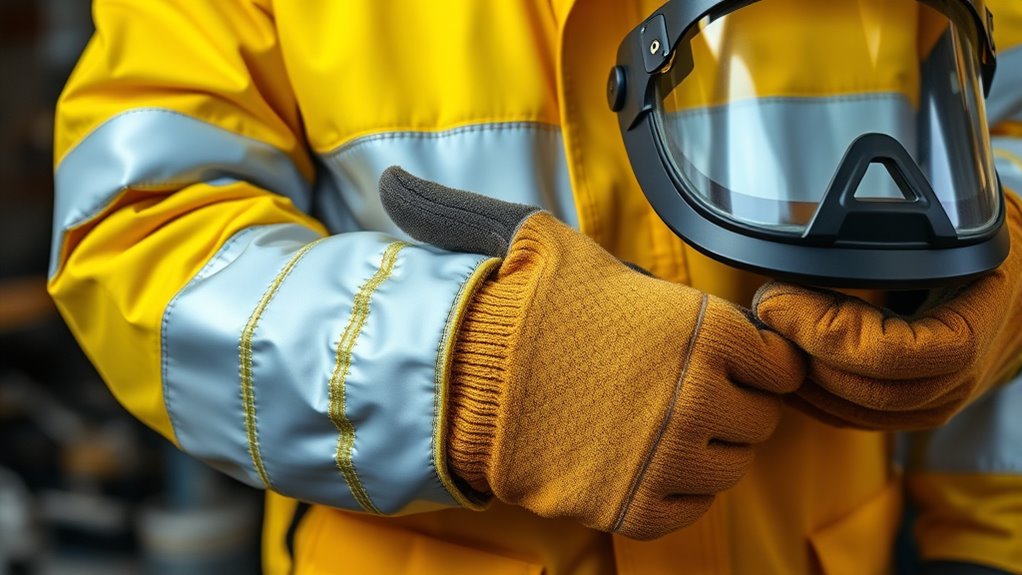
Have you ever wondered how workers stay safe in hazardous environments? It all comes down to the protective clothing they wear. This gear isn’t just about covering up; it’s about creating a reliable barrier against dangers like extreme heat, fire, chemicals, or sharp objects. One of the core principles is layering. You might think of it like dressing for cold weather, but in this case, each layer has a specific purpose. The innermost layer often wicks moisture away from your skin, keeping you dry and comfortable. Over that, you’ll find middle layers that provide insulation or additional protection from heat or chemicals. The outer layer is designed to be tough, resistant to tears, abrasions, or heat, shielding you from the environment. Additionally, advancements in sound design have contributed to the development of smart protective gear that can alert wearers to environmental hazards through embedded sensors.
Protective clothing uses layered design to guard against heat, fire, chemicals, and sharp objects effectively.
Reflective materials are another essential element in safety gear. When you’re working in low-light conditions or at night, these reflective strips and patches catch and bounce light back toward sources like headlights or work lamps. This makes you highly visible to others, reducing the risk of accidents. It’s especially critical in construction zones, roadside work, or industrial plants. The reflective gear isn’t just for visibility either; it’s integrated into the clothing itself, so it stays in place no matter how much you move. When combined with proper positioning and lighting, reflective clothing can be a lifesaver by alerting others to your presence in potentially dangerous settings.
Heat gear, such as fire-resistant or heat-reflective clothing, plays a fundamental role in environments where high temperatures are a constant threat. Fire-resistant fabrics don’t melt or ignite when exposed to flames, providing essential seconds to escape or extinguish a fire. Heat gear may also include cooling elements or moisture-wicking properties to help regulate your body temperature. This is crucial because heat stress can impair your judgment, reduce stamina, and increase the risk of heat-related illnesses. When working near molten metal, hot surfaces, or in environments with intense heat, donning specialized heat gear ensures you’re protected without sacrificing mobility or comfort.
Ultimately, protective clothing combines technology and thoughtful design to keep you safe. Layers provide comprehensive protection, reflectives ensure visibility, and heat gear manages temperature extremes. Each piece works together to create a barrier that allows you to perform your job effectively while minimizing risks. Wearing the right gear isn’t just about compliance; it’s about your safety and well-being. When you understand the significance of proper protective clothing, you’re better equipped to recognize the value it offers and to take responsibility for your safety on the job.
Frequently Asked Questions
How Do I Choose the Right Protective Clothing for Different Weather Conditions?
You should select protective clothing based on the weather conditions you’re facing. In cold weather, opt for insulated layers and heat gear to stay warm. For rainy or wet conditions, choose waterproof and quick-drying materials. In hot weather, wear lightweight, breathable fabrics to prevent overheating. Always consider reflectives for visibility, especially in low-light conditions. Adjust your layers accordingly to stay comfortable, safe, and protected no matter the weather.
What Maintenance Tips Extend the Lifespan of Protective Clothing?
To extend the lifespan of your protective clothing, you should always follow the manufacturer’s care instructions. Regularly wash it with mild detergent and avoid harsh chemicals or bleach. Air dry when possible, and store it in a cool, dry place away from direct sunlight. Inspect for damage before each use and repair small tears promptly. Proper maintenance keeps your gear effective and lasting longer, ensuring your safety remains uncompromised.
Are There Eco-Friendly Options for Protective Clothing Materials?
Yes, you can choose eco-friendly protective clothing made from sustainable, biodegradable, or recycled materials. Look for options labeled with eco-certifications like GOTS or Oeko-Tex to guarantee environmental standards. By selecting these, you reduce your ecological footprint and support eco-conscious manufacturing. Washing these garments with eco-friendly detergents also helps extend their lifespan and minimizes environmental impact, making your safety gear both effective and sustainable.
How Does Reflective Material Enhance Safety During Low-Light Conditions?
Think of reflective material as your modern knight’s armor, making you visible in low-light situations. It works like a mirror, bouncing back car headlights and streetlights, ensuring drivers see you from afar. This boosts your safety by reducing accidents and increasing your visibility. Whether you’re walking, biking, or working at night, reflective gear is essential. It’s like having a personal lighthouse guiding others safely to you in darkness.
Can Heat Gear Be Used Interchangeably With Other Protective Layers?
No, heat gear shouldn’t be used interchangeably with other protective layers. Heat gear is designed specifically to retain body heat and wick moisture, making it ideal for cold conditions. Other protective layers, like insulated or waterproof gear, serve different purposes such as blocking wind or keeping water out. Using heat gear alone may leave you unprotected from elements like rain, wind, or physical hazards, so choose layers based on the specific safety needs.
Conclusion
By choosing the right layers, reflective elements, and heat gear, you subtly enhance your safety and confidence. These thoughtful details serve as a gentle shield, allowing you to focus on your tasks while minimizing risks. Embracing protective clothing isn’t just about safety—it’s about respecting your own well-being with understated elegance. When you prioritize these elements, you create a seamless balance between vigilance and comfort, ensuring you’re prepared for whatever challenges come your way.